

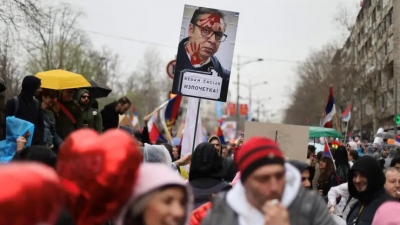
The electoral victory of the Student List in the parliamentary elections of October 25 marked the end of a political era in Serbia. However, the emergence of a new government is not an automatic process. The Serbian Constitution stipulates specific stages for the constitution of the new Parliament, the designation of a prime minister, and the formation of a cabinet, while in the event of a deadlock, the calling of new elections cannot be ruled out.
Parliament must be constituted within 30 days
Following the certification of the final results, the first critical constitutional deadline begins. Within a 30-day window, the first session of Serbia's new National Assembly must be convened. The session is called by the speaker of the previous Parliament, namely Ivica Dačić. During the opening session, parliamentary seats are validated and the new parliamentary leadership is elected. Parliament is considered officially constituted once two-thirds of the seats are validated, meaning at least 167 of the total 250 MPs.
Next prime minister still unknown
Despite the sweeping victory of the Student List, no individual has been announced so far to assume the prime ministership. This comes as no surprise, as the movement itself was built around collective processes rather than around a single figure in the style of Aleksandar Vučić. To date, several prominent personalities have emerged, such as Ilija Srdanović, Jovo Bakić, and Aleksandar Čupić, yet none of them has been officially presented as the future prime minister.
Cardiologist Ilija Srdanović was the official head of the Student List. A professor at the Novi Sad School of Medicine and an active supporter of student mobilizations from the very first moment, he was the figure placed at the top of the ballot without, however, appearing as the leader of the movement.
Sociologist Jovo Bakić evolved into the most recognizable public representative of the Student List. Through continuous television appearances and media interventions, he was the person who articulated the key positions regarding the non-imposition of sanctions on Russia, military neutrality, and institutional reforms promised by the new group. Practically, he is the face many Serbians connect today with the political program of the new majority.
Professor Aleksandar Čupić emerged as one of the most recognizable figures of the student movement as far back as the period of mass demonstrations. His public support for students, his speeches, and his participation in the political initiative that evolved into the Student List established him as one of the symbolic figures of the change taking place today in Serbia.
Profesor Saobraćajnog fakulteta i kandidat na listi Aleksandar Čupić zapevao je pesmu "Ajmo grade svi uz naše mlade". https://t.co/ypiLUAMnDF
— N1 Beograd (@n1srbija) October 22, 2026
The role of Ana Brnabić
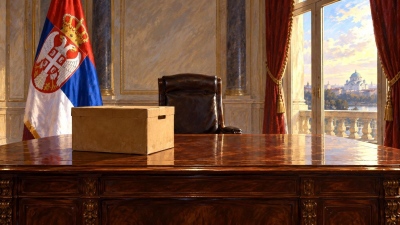
Following the constitution of Parliament, the process of forming a government begins. According to constitutional procedure, Ana Brnabić, who is temporarily exercising the duties of head of state, must hold consultations with the electoral lists that secured parliamentary representation. Subsequently, she will propose the designated prime minister (mandatar), namely the person deemed capable of securing a parliamentary majority.
90 days to form a government
From the moment the new Parliament is constituted, another critical deadline starts ticking. Members of Parliament have 90 days to elect a new government. The prime minister-designate presents the government program and the individuals who will staff the cabinet. To approve the government, at least 126 votes are required out of a total of 250 MPs. The new administration officially assumes office following the swearing-in of the prime minister and ministers before the National Assembly.
What happens if negotiations fail
The Constitution also provides for a deadlock scenario. If a government is not formed within 90 days, Parliament is automatically dissolved and snap elections are called. The new elections must be completed within 60 days of being called, in order to avoid prolonged political uncertainty.
A new political era without a known prime minister yet
The sweeping victory of the Student List brought the largest political shock to Serbia in recent years; however, the fundamental question remains unanswered: who will take over governing the country? For now, the only certainty is that Serbia is entering a transitional period during which not only the composition of the new government will be determined, but also the identity of the political leadership that will succeed the power system dominated for years under Aleksandar Vučić.
www.bankingnews.gr






Σχόλια αναγνωστών